 The EUREQA dataset
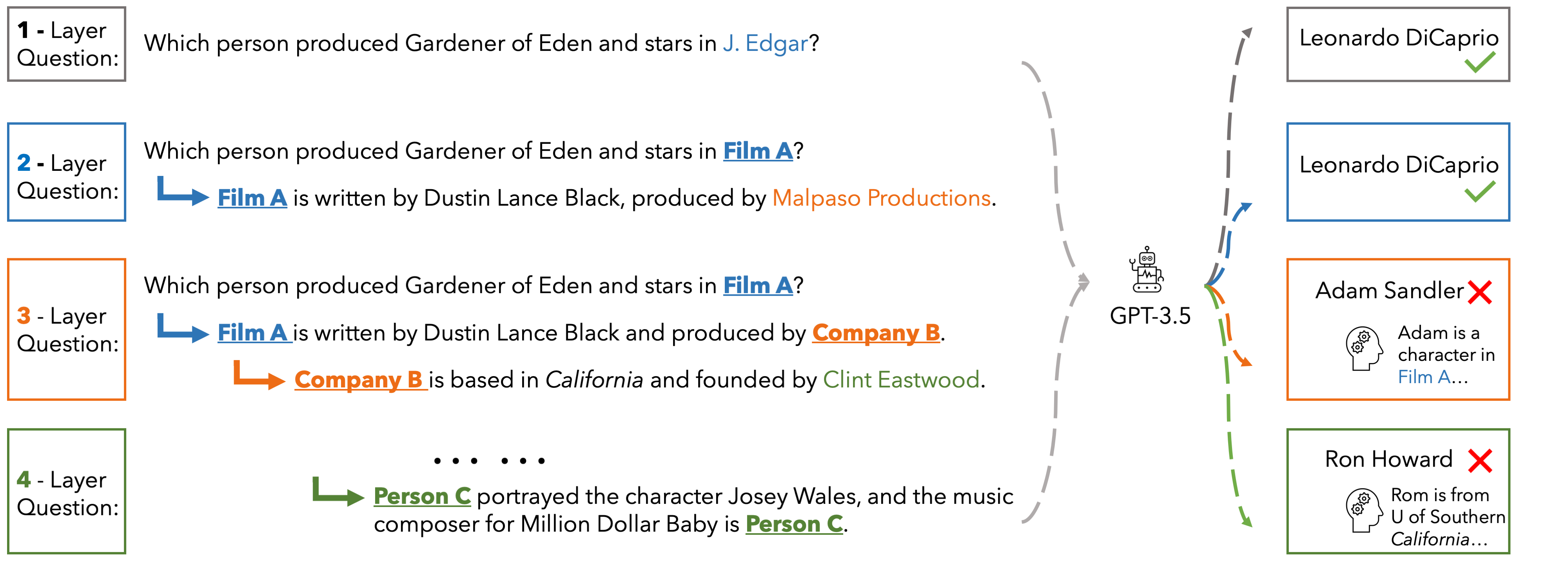
In EUREQA, every question is constructed through an implicit reasoning chain. The chain is constructed by parsing DBPedia. Each layer comprises three components: an entity, a fact about the entity, and a relation between the entity
and its counterpart from the next layer. The layers stack up to create chains with different depths of reasoning. We verbalize reasoning chains into natural sentences and anonymize the entity of each layer to create the question.
Questions can be solved layer by layer and each layer is guaranteed a unique answer. EUREQA is not a knowledge game: we adopt a knowledge filtering process that ensures that most LLMs have sufficient world knowledge to answer our questions.
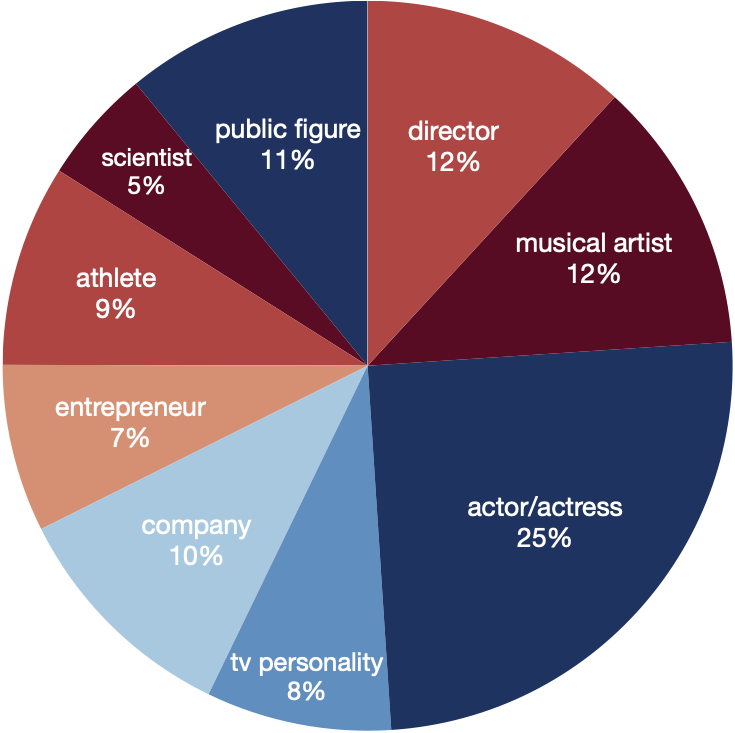
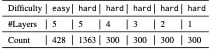
EUREQA comprises a total of 2,991 questions of different reasoning depths and difficulties. The entities encompass a broad spectrum of topics, effectively reducing any potential bias arising from specific entity categories.
These data are great for analyzing the reasoning processes of LLMs
 Performance
Here we present the accuracy of ChatGPT, Gemini-Pro and GPT-4 on the hard set of EUREQA across different depths d of reasoning (number of layers in the questions). We evaluate two prompt strategies: direct zero-shot prompt and ICL with two examples. In general, with the entities recursively substituted by the descriptions of reasoning chaining layers, and therefore eliminating surface-level semantic cues, these models generate more incorrect answers. When the reasoning depth increases from one to five on hard questions, there is a notable decline in performance for all models. This finding underscores the significant impact that semantic shortcuts have on the accuracy of responses, and it also indicates that GPT-4 is considerably more capable of identifying and taking advantage of these shortcuts.
| depth | d=1 | d=2 | d=3 | d=4 | d=5 | |||||
| direct | icl | direct | icl | direct | icl | direct | icl | direct | icl | |
| ChatGPT | 22.3 | 53.3 | 7.0 | 40.0 | 5.0 | 39.2 | 3.7 | 39.3 | 7.2 | 39.0 |
| Gemini-Pro | 45.0 | 49.3 | 29.5 | 23.5 | 27.3 | 28.6 | 25.7 | 24.3 | 17.2 | 21.5 |
| GPT-4 | 60.3 | 76.0 | 50.0 | 63.7 | 51.3 | 61.7 | 52.7 | 63.7 | 46.9 | 61.9 |
Series Title Options
Option 1: The Glass Wall (Drama-focused) Option 2: Breakout: Year One (Action-focused) Option 3: Concrete Jungle (Gritty/Ensemble)
Series Logline After a high-stakes heist goes wrong, a brilliant but arrogant structural engineer is sentenced to a maximum-security prison designed using his own architectural blueprints. To regain his freedom, he must lead a ragtag group of inmates in a high-stakes escape—outsmarting the warden who is hellbent on keeping them behind the walls he helped build.
Series Synopsis Genre: Crime Drama / Thriller Format: 8 Episodes per season The Hook: Elias Thorne was the architect of the future, designing "The Bastion," the world's most inescapable prison. But when he is framed for the murder of his business partner and locked inside his own creation, Elias realizes his knowledge is his only weapon. The Conflict: The prison has been modified since Elias designed it. The plans in his head are 80% accurate, but the remaining 20% could kill them all. Complicating matters is Warden Marcus Vane, a sadistic administrator who knows exactly who Elias is and enjoys the irony of keeping him caged. The Journey: Elias cannot escape alone. He must build a crew from the prison’s population—a hacker, a gang leader, a disgraced doctor, and a young kid in for a crime he didn't commit. They must navigate prison politics, violent rivalries, and the constant surveillance of the guards, all while digging a tunnel that shouldn't exist. prison escape series
Main Characters 1. Elias Thorne (The Architect)
Role: The Mastermind. Description: Late 30s, calculated, meticulous. He views the prison not as a cage, but as a puzzle to be solved. Internal Conflict: Arrogance. He struggles to trust others and often treats his fellow inmates as tools rather than people.
2. Warden Marcus Vane (The Antagonist)
Role: The Jailer. Description: 50s, cold, intellectual. He doesn’t rule with violence; he rules with psychological manipulation. He views the inmates as rats in a maze. Internal Conflict: A crumbling personal life outside the prison walls that threatens to expose his own corruption.
3. Sofia "Ghost" Marquez (The Smuggler)
Role: The Logistics Expert. Description: Cunning and street-smart. She can get anything inside—phones, drugs, tools. She hates Elias initially but respects his intellect. Secret: She is an undercover Federal Agent trapped in deep cover, trying to get evidence out on the Warden before her identity is blown. Series Title Options Option 1: The Glass Wall
4. "Big Tiny" Thompson (The Muscle)
Role: The Enforcer. Description: A mountain of a man with a surprisingly gentle soul. He is the leader of the prison protection racket but joins the escape to see his sick daughter. Conflict: He is dying of an undiagnosed illness and needs the escape to happen fast.
This website is adapted from Nerfies, UniversalNER and LLaVA, licensed under a Creative Commons Attribution-ShareAlike 4.0 International License. We thank the LLaMA team for giving us access to their models.
Usage and License Notices: The data abd code is intended and licensed for research use only. They are also restricted to uses that follow the license agreement of LLaMA, ChatGPT, and the original dataset used in the benchmark. The dataset is CC BY NC 4.0 (allowing only non-commercial use) and models trained using the dataset should not be used outside of research purposes.